Mumbai: Indian cinema has witnessed the rise and fall of several filmmakers whose contributions remain largely unknown to today’s audiences. One such name is Chandulal Jesangbhai Shah, a director, writer and producer who began his journey during the silent-film era and went on to establish a successful film production company. However, a series of box-office failures and heavy financial losses eventually brought his once-grand empire to the brink of collapse.
Who Was Chandulal Shah?
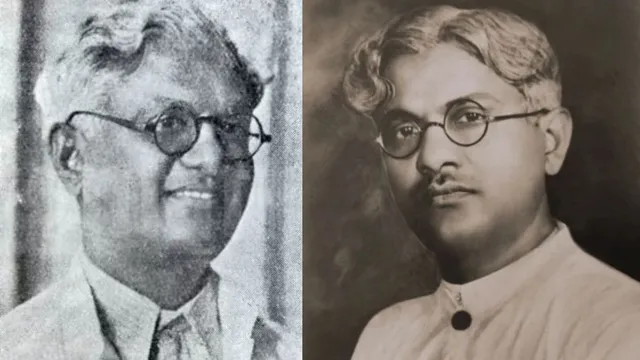
Chandulal Jesangbhai Shah was born on April 13, 1898, in Jamnagar, Gujarat, which was then part of British India. He entered the world of cinema at a time when filmmaking was still in its early stages.
His journey from silent films to talkies was marked by several significant achievements. Shah’s entry into the film industry was largely accidental. His elder brother, Dayaram Shah, also known as J. D. Shah, wrote stories for mythological films.
While helping his brother, Chandulal began visiting film studios. In 1925, he got an unexpected opportunity to direct the film Vimla, produced by Lakshmi Film Company. The film’s original director, Manilal Joshi, fell ill, and Shah stepped in to take charge. This chance marked the beginning of his successful career as a filmmaker.
Chandulal Shah and Gauhar’s Successful Partnership
After Vimla, Shah reportedly met actress Miss Gauhar. Their association soon became an important part of his filmmaking career.
His 1926 film Typist Girl, featuring Sulochana and Gauhar in lead roles, became a major hit. The film was reportedly completed in just 17 days and helped establish Shah among the prominent directors of his time.
He continued directing successful films, including Gunsundari in 1927, and went on to make several more films with Gauhar.
Ranjit Film Company Became a Major Production House
In 1929, Chandulal Shah took a major step by establishing Ranjit Film Company. It was later renamed Ranjit Movietone. The company was set up with assistance from Vitthaldas Thakordas.
The production house soon became a prominent name in the industry. By 1932, Shah had reportedly produced around 35 to 40 films under its banner.
By the 1940s, the company had transitioned from silent cinema to talkies. It produced several films every year, many of which reportedly performed well at the box office.
The studio also provided employment to numerous actors, technicians and other film industry workers.
Among the films associated with Shah were Savitri (1932), Barrister’s Wife (1935), The Secretary (1938), Achhut (1940), Tansen (1943), Murti (1943) and Jogan (1950).
Was Chandulal Shah in Love with Gauhar?
It is said that actress Gauhar held a special place in Chandulal Shah’s heart. According to accounts, she was not only one of his favourite actresses but also someone he was romantically attached to.
Gauhar remained associated with his production company and worked alongside him for several years.
Apart from filmmaking, Shah was also active in industry affairs. He served as president of the Indian Motion Picture Producers’ Association (IMPPA) from 1944 to 1945 and continued to remain involved with the organisation afterwards.
A Raj Kapoor Film Marked the Beginning of His Downfall
In 1953, Chandulal Shah produced the film Paapi, starring Raj Kapoor and Nargis. The film failed to perform well at the box office, and this setback reportedly marked the beginning of a decline in Shah’s fortunes.
He continued making films in the following years, including Oot Patang in 1955, Zameen Ke Taare in 1960 and Akele Mat Jaiyo in 1963. However, these films also failed to achieve the expected box-office success.
With a string of unsuccessful projects, Shah’s influence in the industry gradually weakened.
From a Luxurious Lifestyle to Financial Hardship
The losses from his films were not the only setback Shah faced. He also reportedly suffered heavy financial losses in the stock market and at racecourses.
His once-prosperous empire began to fall apart. At one point, Shah reportedly owned dozens of luxury cars, while hundreds of artists and employees worked on salaries at his studio.
However, his final years were marked by financial difficulties. The filmmaker who had once enjoyed a lavish lifestyle reportedly had to travel by public buses.
Chandulal Shah’s life remains a striking story of success, ambition and a dramatic fall in the history of Indian cinema.