Film Details:
- Film: Gondhal
- Director: Santosh Davakhar
- Genre: Marathi Thriller
- Theatrical Release: November 13, 2026
- Rating: 3/5
The film revolves around Suman (Ishita Deshmukh), a young woman from rural Maharashtra who finds herself trapped in a marriage she never wanted. She is married to Anand (Yogesh Sohoni), but her heart belongs to Sahebrao (Anuj Prabhu), a Gondhali performer. On her wedding night, during the traditional Gondhal ceremony, Suman gets an opportunity to escape with the man she loves. However, events take an unexpected turn, leading to a night filled with deception, violence and shocking developments.
Gondhal: A Wedding, a Ritual and Several Hidden Motives
The film takes its time introducing the characters and establishing the social dynamics of the village. Initially, Suman was supposed to marry Sarjerao (Nishad Bhoir), the son of influential village head Abasaheb (Suresh Vishwakarma). However, the marriage proposal becomes complicated when Sarjerao’s family demands dowry, forcing Suman’s parents to arrange her marriage with Anand instead.
What makes this situation particularly significant is Suman’s lack of control over her own future. Although she has the courage to pursue the man she loves, her personal wishes are pushed aside when it comes to marriage. This contradiction becomes one of the central conflicts of the film.
Abasaheb’s influence over the village adds another layer to the story. He is a man who rules through fear and uses his position to exploit those around him. His son has ambitions of his own, while the other characters are driven by their personal interests. Gradually, the film brings these parallel storylines together, with the Gondhal ceremony becoming a witness to several uncomfortable truths. It is not merely a wedding celebration but also a setting where power, desire and resentment come to the surface.
Gondhal: The Technical Experiment Works, but Only to an Extent
One of the film’s strongest aspects is its cinematography. Gondhal opens with an approximately 25-minute single-shot sequence featuring Bhivba (Kishor Kadam) and his grandson Vishnu (Dhruv Thoke) as they make their way towards a village celebration.
Shot by Amalendu Chaudhary, this extended sequence introduces the characters without relying on conventional cuts. The camera travels through the village, capturing conversations, passing vehicles and everyday interactions that gradually reveal the local power equations.
It is an interesting way of introducing the world of the film, and the patience with which the sequence unfolds deserves appreciation. The single-shot technique also gives the narrative a sense of immediacy, allowing viewers to experience the village atmosphere rather than simply observe it from a distance.
However, as the story progresses, the technique sometimes becomes more noticeable than the storytelling itself. Once the film establishes its visual identity, it struggles to maintain the same level of engagement through its narrative. The decision to eventually move away from the single-shot format also raises questions about whether the experiment could have been used more consistently throughout the film.
A technical achievement deserves recognition, but it should strengthen the storytelling rather than become the main attraction on its own.
Gondhal: Performances Keep the Story Grounded
Ishita Deshmukh is one of the film’s biggest strengths. As Suman, she portrays a woman troubled by circumstances imposed on her but determined to find a way out. Her performance has an unpolished, raw quality that suits both the character and the film’s rural setting.
Kishor Kadam brings experience and credibility to the role of Bhivba, while Suresh Vishwakarma makes Abasaheb a menacing presence. His character represents a form of local authority built on fear rather than respect. Nishad Bhoir also makes his presence felt as Sarjerao.
Yogesh Sohoni and Anuj Prabhu drive the central conflict, although the emotional relationships between their characters could have been developed further. Several other performers, including relatively unfamiliar faces, contribute to the film’s realistic atmosphere.
The performances have an earthy and unpolished quality that works in the film’s favour. The characters rarely appear overly rehearsed, helping preserve the authenticity and simplicity of the rural setting.
Gondhal: Ilaiyaraaja’s Music Adds Cultural Depth
Another distinctive feature of Gondhal is its association with legendary composer Ilaiyaraaja. His music gives the film a unique identity, while the song ‘Chandan’, sung by Ajay, adds a particularly pleasant musical moment.
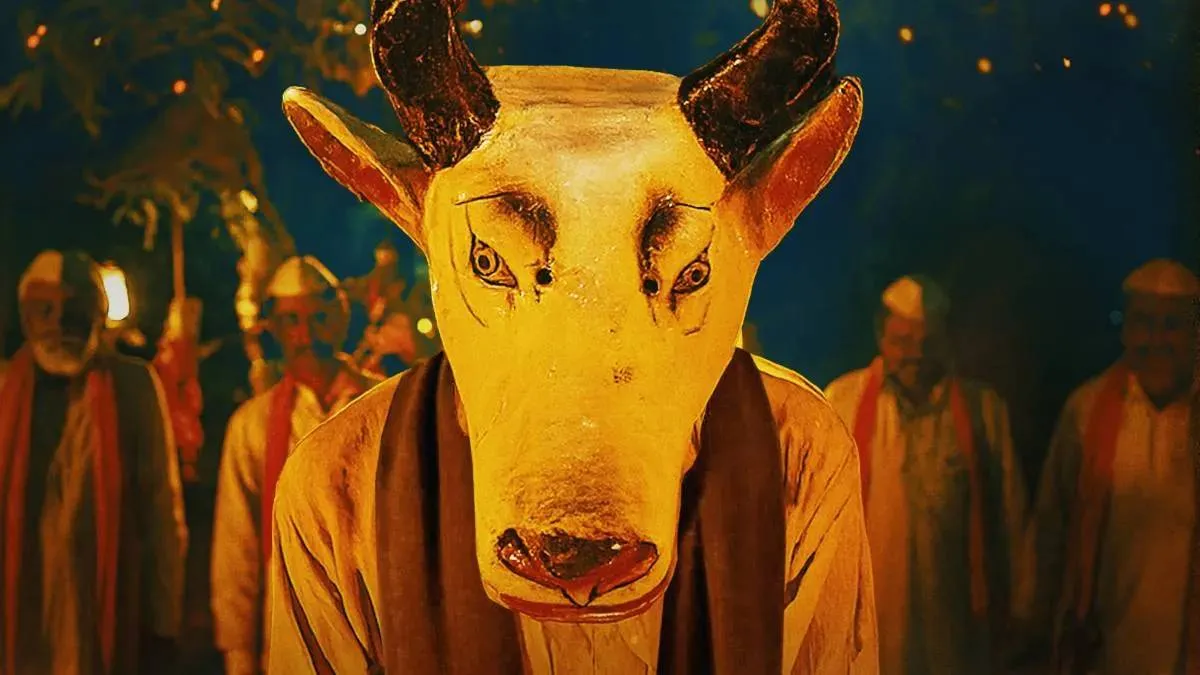
The Gondhal performance itself is an important part of the narrative. For viewers unfamiliar with this tradition, the film offers a glimpse into a folk practice that holds cultural and religious significance in Maharashtra. Its colourful performances, music and rituals create a striking visual contrast with the dark events unfolding in the story.
However, the film could have connected this cultural element more meaningfully with its central narrative. At several points, the Gondhal performance runs alongside the main drama without making a significant contribution to the story. Given the prominence of the ritual in the film’s title and setting, viewers naturally expect a deeper connection between the tradition and the characters’ journeys.
The cinematography, sound design and editing create an impressive technical foundation, even though the screenplay does not always make full use of these strengths.
Where Gondhal Loses Its Way
The biggest problem with Gondhal is that it tries to accommodate too many ideas at once. It wants to function as a psychological thriller, comment on rural power structures and showcase Maharashtra’s folk heritage. While these themes can certainly coexist, the writing does not always manage to strike the right balance.
The film touches upon caste, class, patriarchy, sexual exploitation and the misuse of authority. These are relevant subjects, and the narrative deserves credit for not shying away from uncomfortable realities. However, some of these issues feel added on to an already crowded storyline rather than being naturally integrated into it.
The characters also do not always receive the depth they deserve. Abasaheb, for instance, is presented as an extremely cruel and powerful man, but the screenplay rarely explores anything beyond his negative side. Similarly, several developments unfold without giving viewers enough time to understand their emotional consequences.
The final portion is particularly weak. As the twists multiply and the violence intensifies, the film gradually loses its emotional grip. Events that should have a lasting impact pass by without leaving a strong impression.
A thriller can surprise its audience, but it must also create an emotional connection with its characters. This is where Gondhal struggles to maintain consistency.
Gondhal Review: The Final Verdict
Santosh Davakhar deserves appreciation for attempting something different with Gondhal. The setting is intriguing, the opening sequence is impressive, and the subject introduces audiences to a folk tradition that many may not know much about. The performances and technical aspects also make the film worth considering.
However, its biggest strength eventually becomes one of its limitations. The film is full of ideas, but the screenplay fails to bring them together into a cohesive and compelling narrative. Its social commentary could have been sharper, the cultural elements could have been more deeply woven into the story, and the climax could have delivered a stronger emotional impact.
Being selected as India’s official entry for the Oscars has given Gondhal a wider platform, but the film is more than just its international recognition. It is an ambitious attempt at Marathi storytelling that deserves attention, even if it does not completely live up to its potential.
Gondhal is worth watching for its cinematic experimentation, cultural setting and performances. However, its storytelling leaves viewers wishing for something more.